 Frog Blog
Frog Blog
Frog Blog
Machine learning models are computer programs that recognize patterns in data and make decisions based on unknown datasets. For example, in image recognition, an ML model can learn to recognize objects like cars or dogs. In natural language processing, ML models can interpret and analyze human language.
These ML models are created using ML algorithms and trained on labeled, unlabeled, or mixed data depending on their future goal.

A machine learning algorithm is a mathematical method used to find patterns in a dataset. These algorithms are often derived from statistics, calculus, and linear algebra. Some popular ML algorithms include:
Linear Regression
Decision Trees
Random Forest
XGBoost
During training, the algorithm is optimized to recognize certain patterns or outputs in a given dataset. Over time, it improves its classification or prediction accuracy, ultimately becoming a trained ML model.

In supervised learning, models are trained on labeled data. Some common supervised learning algorithms include:
Unsupervised learning models find patterns in unlabeled data. Some common algorithms include:
The best machine learning model depends on the problem being solved. For example, to predict the number of vehicle purchases in a city, a supervised learning method like linear regression would be suitable.
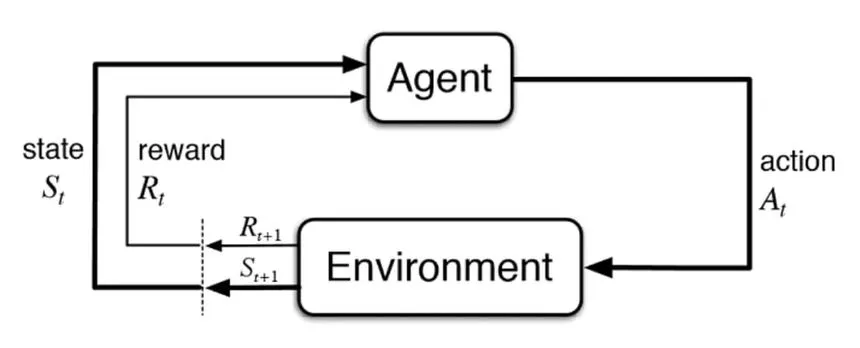
Reinforcement learning (RL) is a type of ML where an agent learns to interact with an environment through trial and error. RL systems receive rewards for correct actions and penalties for incorrect ones.
A well-known example of RL is autonomous driving, where a model continuously learns to make better decisions based on real-world interactions.
RL has many real-world applications, including:
Machine learning models play a crucial role in modern technology, enabling computers to make decisions, recognize patterns, and automate processes. Choosing the right ML algorithm depends on the type of data and the desired outcome.
From supervised and unsupervised learning to reinforcement learning, ML techniques continue to shape industries like healthcare, finance, robotics, and AI-driven decision-making.