 Frog Blog
Frog Blog
Frog Blog
“Any fool can write code that a computer can understand. Good programmers write code that humans can understand.”
The art of clean code is an essential skill for any software developer. The term ‘clean code’ refers to code that is easy to read, understand, and maintain. Writing clean code ensures efficiency, scalability, and overall project success by focusing on code quality.
Clean code principles lead to highly modular source code, making it easier to read, test, and maintain.
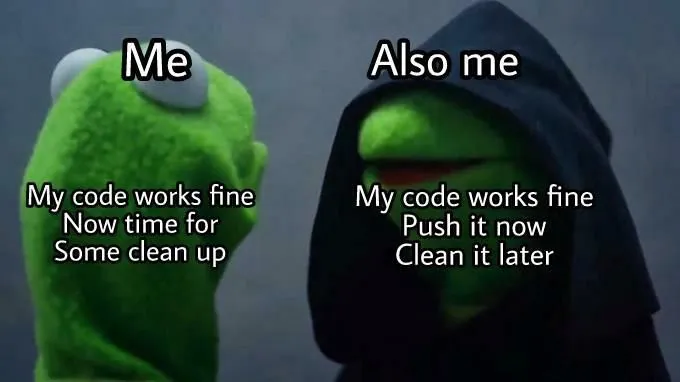
Clean code is critical in software development, as it can make or break a project. Following clean code principles prevents technical debt, simplifies refactoring, and ensures testability.
More code means higher complexity, and higher complexity leads to increased maintenance costs. Keeping only the necessary code lowers production, maintenance, and infrastructure costs.
Clean code improves the developer’s work environment and significantly reduces runtime risks.
Reducing duplicate code enhances readability and minimizes errors. Use reusable structures like arrays instead of creating multiple variables for the same data type.
When projects grow, organizing variables properly improves readability. Keep variable declarations at the top or group them logically (e.g., categorizing similar objects together).
Using misleading variable names, single-letter names, or misspellings makes code difficult to understand. Choose clear, meaningful names.
Whitespace enhances readability. Keep it in the development phase, and use minification tools to remove unnecessary spaces before deployment.
Comments should explain complex logic but not be excessive. Avoid redundant comments—let the code speak for itself.
Consistent naming conventions improve readability. Prefix variables appropriately and choose simple but descriptive names.
When using multiple loops, declare the iterator outside and reuse it (e.g., `i`). This improves clarity and efficiency.
Use naming conventions to indicate scope (e.g., `_variable` for private values, `CONSTANT_VALUE` in uppercase).
Long function definitions clutter code. Each function should perform a single responsibility—break down complex tasks into smaller, reusable functions.
Clean code is all about readability, structure, and consistency. The guidelines above are not rigid rules but best practices to maintain high-quality code.
The best part about writing clean code is that it's not difficult—it’s just a habit. Once developers internalize these principles, they will wonder how they ever coded without them.
Clean code improves development efficiency, enhances collaboration, and makes future maintenance effortless. Focus on clear intent and thoughtful organization to create maintainable, scalable software.